
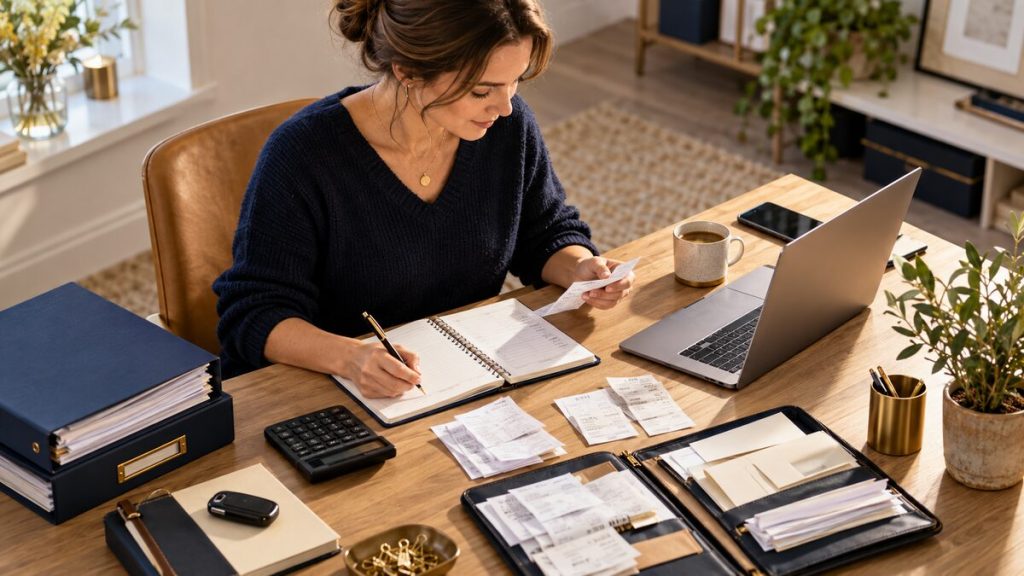
What Records Does a Sole Trader Need to Keep?
Know what to keep, how to organise it and why complete records make year-end accounts easier.
Sole trader record keeping requirements Sole trader record keeping requirements cover the evidence behind your business income and costs. Clear records let you explain each figure, follow unpaid invoices and prepare accurate accounts. They also reduce time spent searching for paperwork later.
Good records are not only for year end. They help you follow customer payments, plan spending and spot issues sooner. The aim is a simple system that you can maintain consistently.
What Records Does a Sole Trader Need to Keep?: the essentials
Sales and income
Keep sales invoices, till summaries, platform statements and other evidence of money earned.
Business purchases
Retain supplier invoices and receipts showing what was bought, when and for how much.
Banking evidence
Store business bank statements and payment-service reports so transactions can be matched.
Supporting details
Record mileage, stock, equipment, money introduced and personal drawings where relevant.
A simple four-step process
Record transactions promptly
Enter sales and costs while the purpose and payment method are fresh in your mind.
Attach the source document
Link or file each receipt, invoice or statement with the matching transaction.
Use clear categories
Apply consistent categories so reports remain meaningful and year-end checks are quicker.
Back up and review
Protect digital records with secure access and backups, then review gaps every month.
Build the routine around your business. Keep it straightforward, review it regularly and improve it as transaction numbers grow.
Common mistakes to avoid
Do not mix personal and business spending without a clear record. Avoid relying on bank statements alone because they may not explain what a cost was for. Also, do not leave missing receipts and customer debts until year end. Small gaps become harder to resolve with time.
Instead, keep evidence at the point of purchase, number invoices consistently and record how customers paid. Back up your digital files, restrict access where appropriate and retain records for the required period. For current record-retention rules, always check the latest guidance on GOV.UK.
Questions from new business owners
Do bank statements count as complete records?
They are useful evidence, but often do not show enough detail on their own. Keep the related invoice or receipt too.
How long must a sole trader keep records?
Retention rules depend on the record and circumstances. Check current GOV.UK guidance for the period that applies to you.
Can you help organise older records?
Yes. We can support catch-up bookkeeping, computerised records and accounts preparation for sole traders and partnerships.
Want a bookkeeping system that is ready to grow?
Real Key Accountancy can support bookkeeping, computerised records and accounts preparation for sole traders and partnerships. We can help you organise the information needed for a clear, reliable process.
This guide is general information, not individual tax or legal advice. Requirements can change, so check current GOV.UK guidance or speak with an appropriately qualified adviser where needed.